The American Glitch: Why We're Tired, Wired, and Stuck in a Stress Loop
Written by
In America, we've turned health into a high-stress chore. We sit in traffic, grind through a distracted hour at the gym while scrolling on our phones, and we fuel the entire process with ultra-processed convenience laden with additives that are banned overseas.
Across much of the globe, "exercise" and nourishment look a lot different than they do here: walking to the local market to pick up fresh produce, bike riding through public squares, eating smaller-portioned meals consisting of whole foods, and spending leisure time doing nature-based activities.
This cultural gap has created a uniquely American crisis: we are one of the most over-fed yet under-nourished nations, and one of the most "active" yet most sedentary. While peer nations use movement and whole foods as a natural nervous system stabilizer, the American environment is essentially "pro-inflammatory".
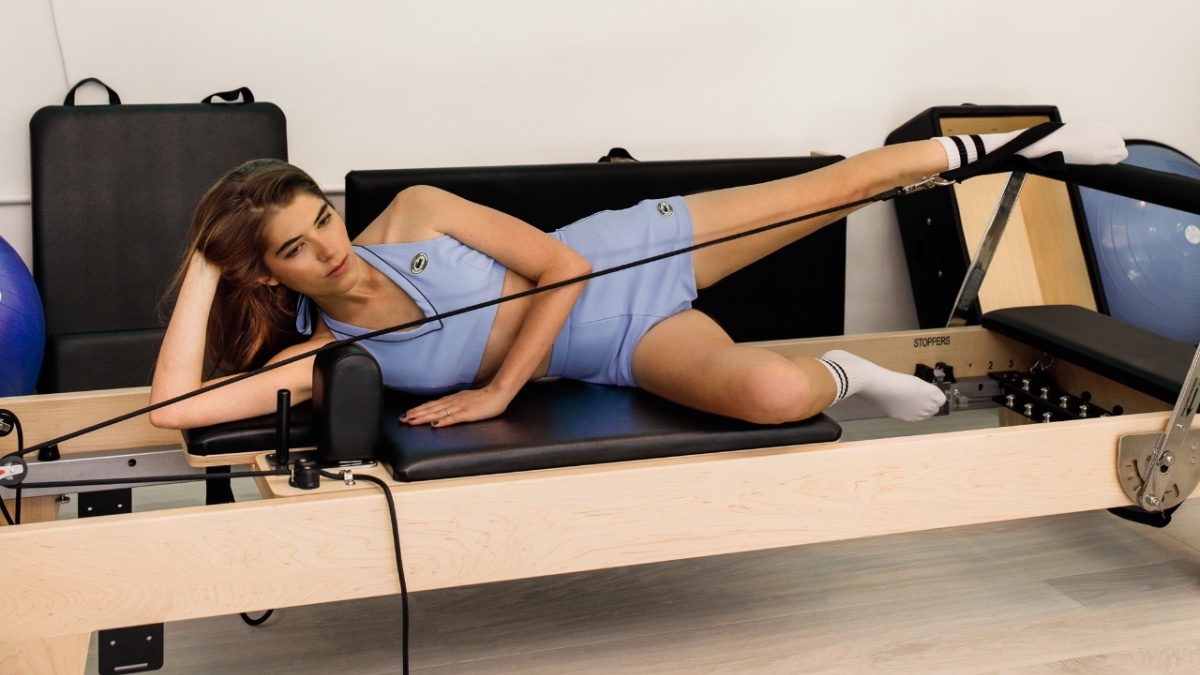
As owner and founder of House of Pilates, a boutique fitness studio and lifestyle coaching practice in West Palm Beach, I am committed to helping my clients be the outliers in this uniquely dower American tale. Working to support their health journey on a physical and metabolic level also means helping them regulate their nervous systems and manage stress.
Although my practice relies on individualized recommendations, as I only work one on one with clients both inside and outside of the gym, below are some recommendations to fix the Glitch:
1. Focus on Whole Foods
America reports among the highest rates of depression and anxiety compared to other high-income countries, so it should also come as no surprise that the U.S. leads the world in consumption of ultra processed foods. Individuals who have a high intake of ultra processed foods are more likely to exhibit depressive symptoms, anxiety, and mental distress.
Recent studies have shown a causal connection between consumption of ultra-processed foods, which make up 60% of the average American adult's caloric intake, and mental illness—for every 10% increase in consumption, there is a 11-12% increase in the risk of depression.
Whole foods provide the nutrients we need to thrive, but many American processed foods, even those that market themselves as health foods, contain additives, artificial food dyes, and industrial gums and emulsifiers, some of which have even been banned in other countries due to their links to neurological issues. These additives can erode gut lining, contributing to "leaky gut" and chronic inflammation that travels straight to the brain and directly contributes to depression. By choosing whole foods, you protect the gut microbiome, where 95% of your serotonin (otherwise known as the "happy hormone") is produced.
So, what is the moral to the story? Buy whole foods, or those with the least amount of ingredients, all of which you should be able to pronounce and picture in your head. Choose organic and (even better) local, in-season produce when possible. And when my clients ask me if they should be eating something, I ask them one simple question: how is this food fueling your body, what nutrients is it providing to help you function better? If it takes too long to think of the answer, you already know what it is.
2. Build Your Meal Around Protein
The American diet has relied on a foundation of refined carbs, which cause rapid insulin spikes. When blood sugar crashes, the body releases adrenaline and cortisol to stabilize it, which can trigger feelings of high anxiety.
However, just like produce, the quality of your protein matters. Choose grass, finished, and regeneratively raised meats—not just cow, but bison, venison, and elk as well—that are richer in antioxidants and omega-3's contributing to brain health as opposed to corn-fed meats. Buy fish that's third party tested for mercury, microplastics, antibiotics, and hormones. Lastly, this is probably the hardest one as it has not truly become mainstream, but choose poultry that eat bugs and grass instead of corn and soy due to its higher nutritional profile and lesser likelihood of contributing to inflammation.
I could write a whole article about protein powders and protein bars, but, in general, stick to powders that have one single ingredient, and, if they are plant-based, ensure they are organic. Additionally, protein bars are culprits for having long lists of ingredients, so try to choose one that has mostly whole food ingredients.
3. View Exercise as a Longevity Tool, Not a Chore
In terms of exercise, the U.S. reports one of the highest rates of physical inactivity. Now, this isn't all our fault—most of our cities in America are very car-dependent, while cities overseas are built with walking, biking, and easily accessible public transportation in mind.
Sedentary behavior doesn't just make you gain weight, although that would make sense since the U.S. has one of the highest global rates of obesity; it physically "stiffens" the nervous system. When we don't move, our body struggles to process cortisol. This leads to neuroinflammation, which can lead to obesity and depression.
At House of Pilates, I train clients of all ages. But what I see in a lot of my older clients is some sort of loss of mobility that is difficult to rectify if they have not been dedicated to moving their bodies throughout their lives.
Think of exercise as a biological "system update." It releases natural fertilizers (BDNF) that repair the brain's mood centers and "hope molecules" (myokines) that wash away internal inflammation. This process shields your DNA from the wear and tear of stress, keeping your cells biologically 9 to 10 years younger than those of sedentary peers.
I try to instill in my younger clients that the goal of working out should be to protect against the physical and even mental effects of aging. Exercise releases "natural fertilizers" (BDNF) that repair the brain's mood centers and "hope molecules" (myokines) that wash away internal inflammation. This process shields your DNA from the wear and tear of stress, keeping your cells biologically 9 to 10 years younger than those of sedentary peers. In real life terms, that means you're less likely to have a joint replacement, broken bone, or musculoskeletal problem down the line. Additionally, learning complex, mindful movements creates new neural pathways, keeping the brain as "fit" as the muscles, which can help combat the mental signs of aging.
4. Ditch the Workout Distractions
I have stopped going to commercial gyms, and I have encouraged my clients to do the same. Why? If you look around, you'll notice more of an emphasis on influencers filming themselves than focusing on their workouts.
Similarly, I have stopped doing online workouts because, be honest with yourself, are you really ignoring that text message that comes in when your eyes are glued to the screen? Probably not.
Distractions like phones and filming trigger you to look at others thus spiking cortisol and shifting your brain from internal focus to social performance that can keep you in flight or fight mode. When you focus on your breath and mindful movement, you signal safety to your brain.
When clients come to me, they are obviously not looking at their phones, but when they are working out on their own time, I encourage them to put their phones on "Do Not Disturb" and to only use their phones if they want to film their form on an exercise to send to me for feedback.
5. Focus on Mindful Movement and Individual Training
This may seem similar to my last point, but I think this point warrants a separate section. While many find enjoyment out of workout classes, I believe you get the most out of a workout when you are one-on-one with an instructor whose sole focus is on you. Workout classes or semi-privates are certainly more affordable and are better than nothing, but, in terms of nervous system health, I believe they do not compare to private sessions in terms of the benefits reaped.
That is why I started House of Pilates. I wanted to create a studio dedicated to private training where my clients could train free of distraction and in an environment where my sole focus was on them.
In a class, it is hard to be mindful with music pumping, people joining late, and everyone doing a somewhat different variation of the move the instructor is trying to teach. Talk about sensory overload! Even in a semi-private, you and your partner may not be of equal fitness levels, which means whoever is teaching you both is probably catering to the lowest common denominator (trust me, I've been there!).
Exercise alone improves health, but exercise with mindfulness doubles the rate of psychological resilience. Without it, people often rush through their workouts to keep up with everyone else without thinking about which muscle they are targeting. This can increase stress in an already overtaxed nervous system.
Working one on one with my clients allows them to sync their breath with movement and focus on tempo, control, and activating precise muscles instead of counting reps, wondering if they're doing a move correctly, and trying to keep up with everyone else. The precision and focus of private sessions result in a better, more targeted workout while building to a more resilient nervous system and lowering stress hormones.
6. Connect With Nature
We are biologically wired for the outdoors. Even ten minutes in nature lowers your heart rate and clears out stress chemicals that tell your brain it's under attack. It is the fastest way to signal "rest and digest" to your system.
We are lucky enough around here to live in a beautiful environment. I encourage clients to go to the beach and walk by the water and to really pay attention to the natural elements instead of looking down at their phones.
7. Build in Rest Days
You don't get stronger during the workout; you get stronger during rest when your body must repair itself. Rest days prevent "system overload" and allow your parasympathetic nervous system to fully repair your tissues and reset your baseline. I tell my clients to try to stick to around four quality workouts a week, depending on the week, and supplement with walks, active mobility, and breath work.
This is nowhere near a comprehensive list, as there are other environmental factors contributing to the dysregulation of our nervous systems, but, to me, I have always viewed exercise and what we put in our bodies as the foundation upon which we can build healthier bodies and minds to get ourselves out of this stress loop.
Share this article
Written by
Nolan Greenwald
Partner